A screen that runs unattended,
and admits when it is stale.
Countdown, what is on air, what is next, what follows — for the studio, the green room or the backstage corridor. It runs on a link, keeps the display awake and hides the cursor on its own.
It carries segment names, times and status, and nothing else: no script, no crew contacts, no production notes. That is a projection built on the server, which is what makes it safe to hang where guests can read it.
If the data stops being fresh, it dims and says so. A frozen screen that still looks alive is worse than a dark one, because people believe it.
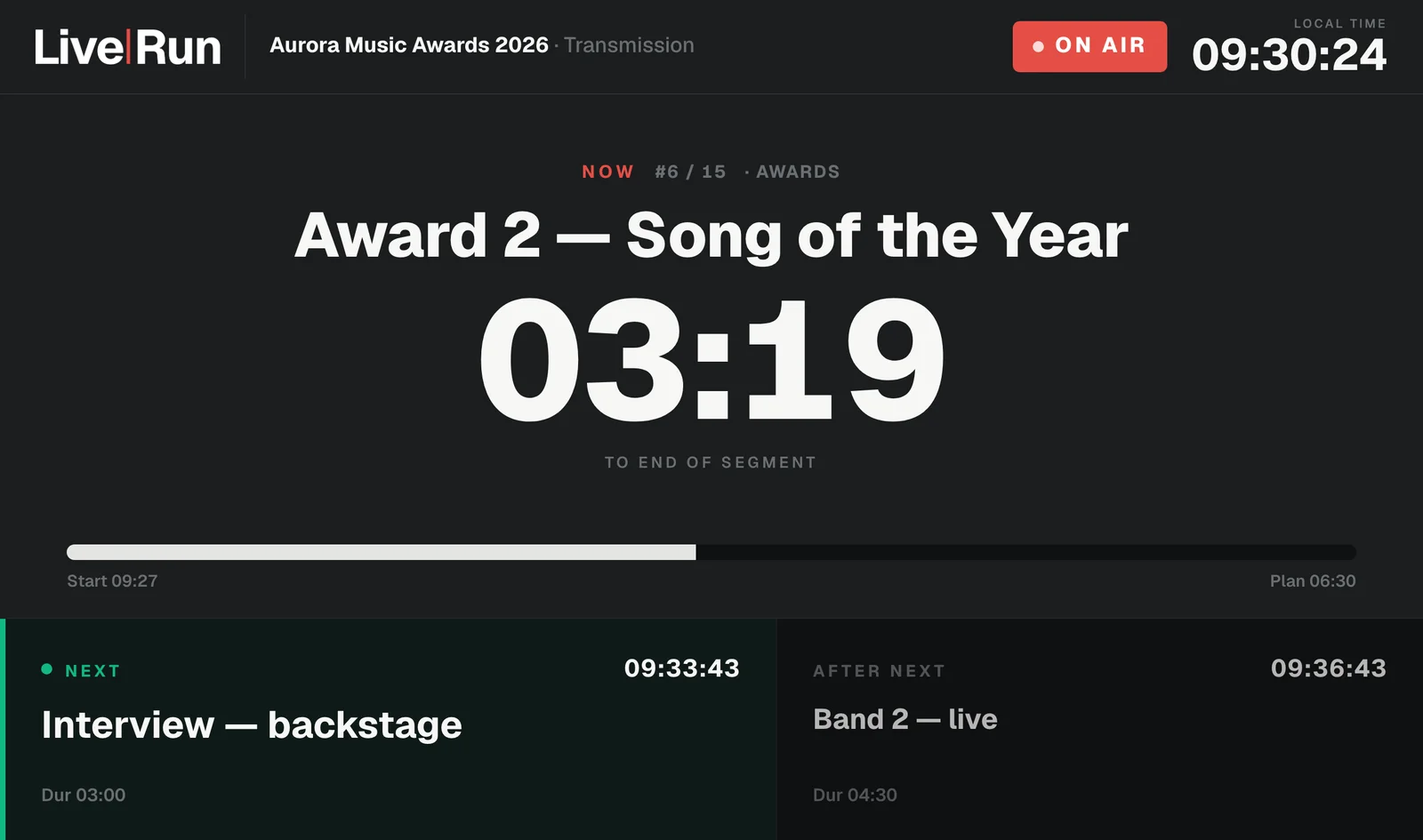
WallboardStudio, compound, green roomOn air
What was planned, what happened,
and by how much.
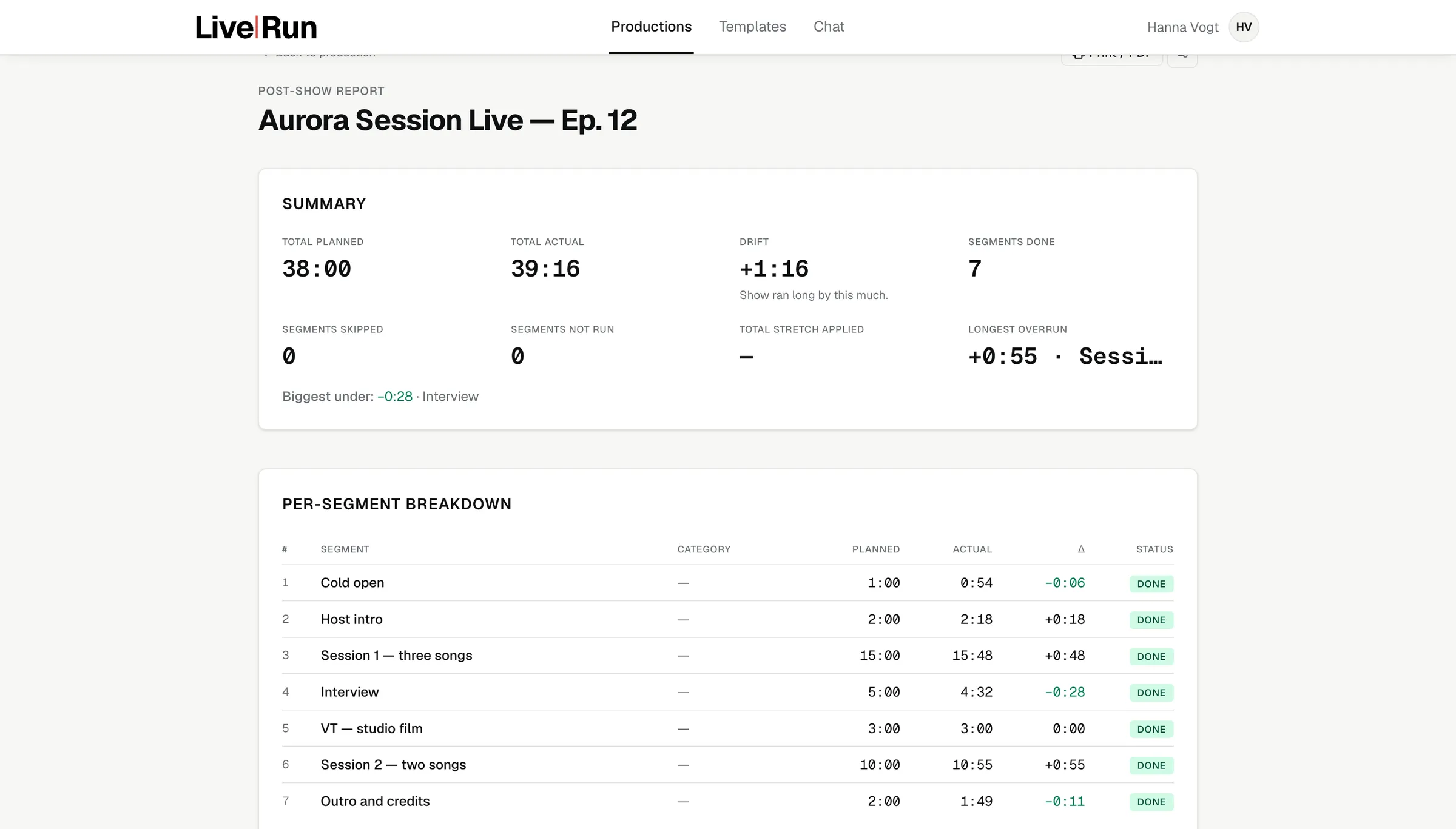
Planned against actual, segment by segment, with the longest overrun named. The next edition of the same format is planned against what happened, not against what anyone remembers.
Who changed what, and when.
Every change to a production leaves a record. The trail groups itself into runs instead of listing every keystroke, so the handful of lines that matter are on the first screen rather than on page nine. Records cannot be edited or deleted afterwards — that lock applies to our own service accounts too, which is what makes the report evidence rather than a note.