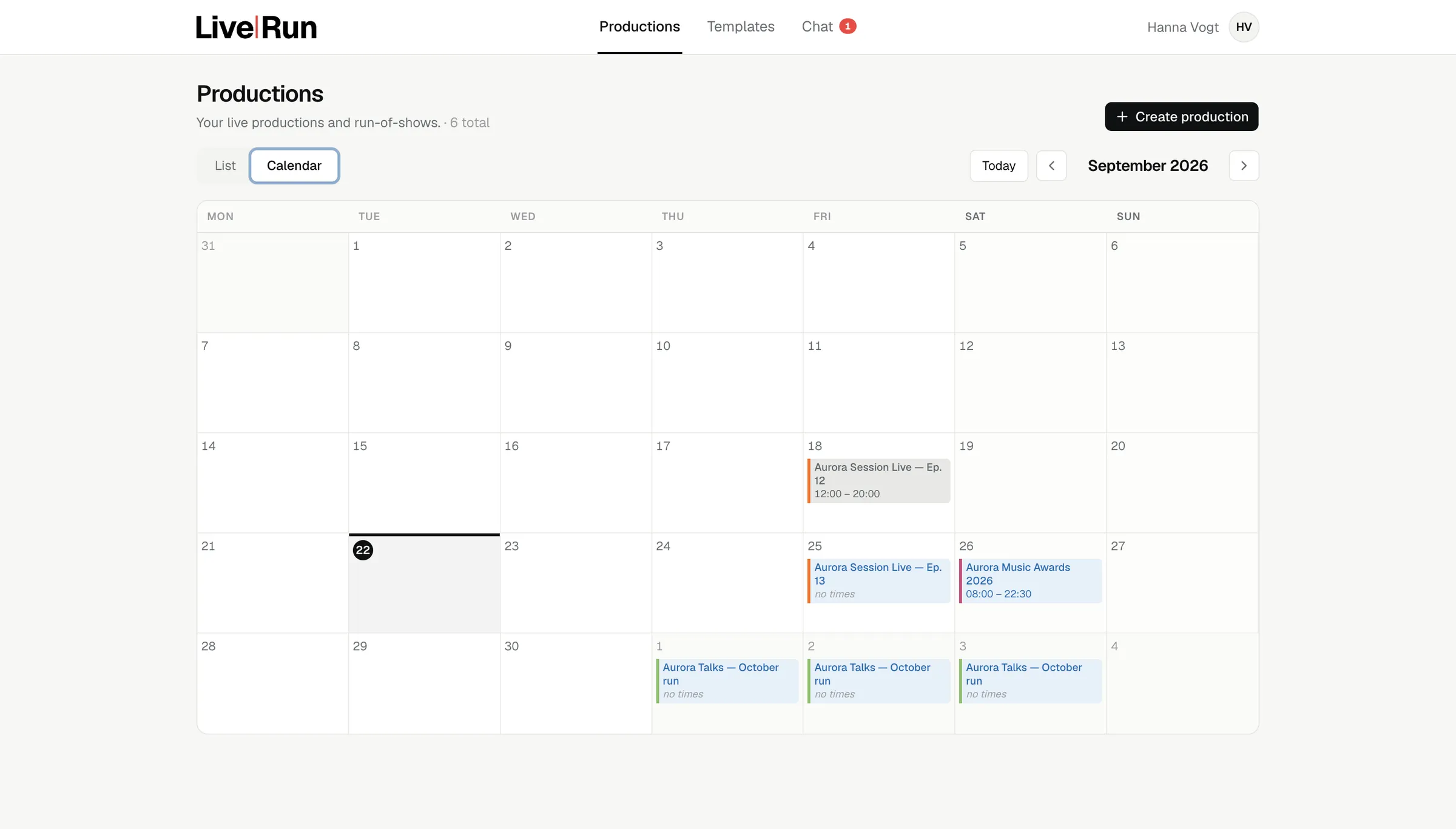
One calendar, every production, months out.
Shoot days, rehearsals and transmissions across every production you run, in one view — so a clash shows up while there is still time to move something. It publishes as a subscription feed, so the dates land in the calendar the rest of the company already uses.
Days, blocks, and a cascade you can stop.
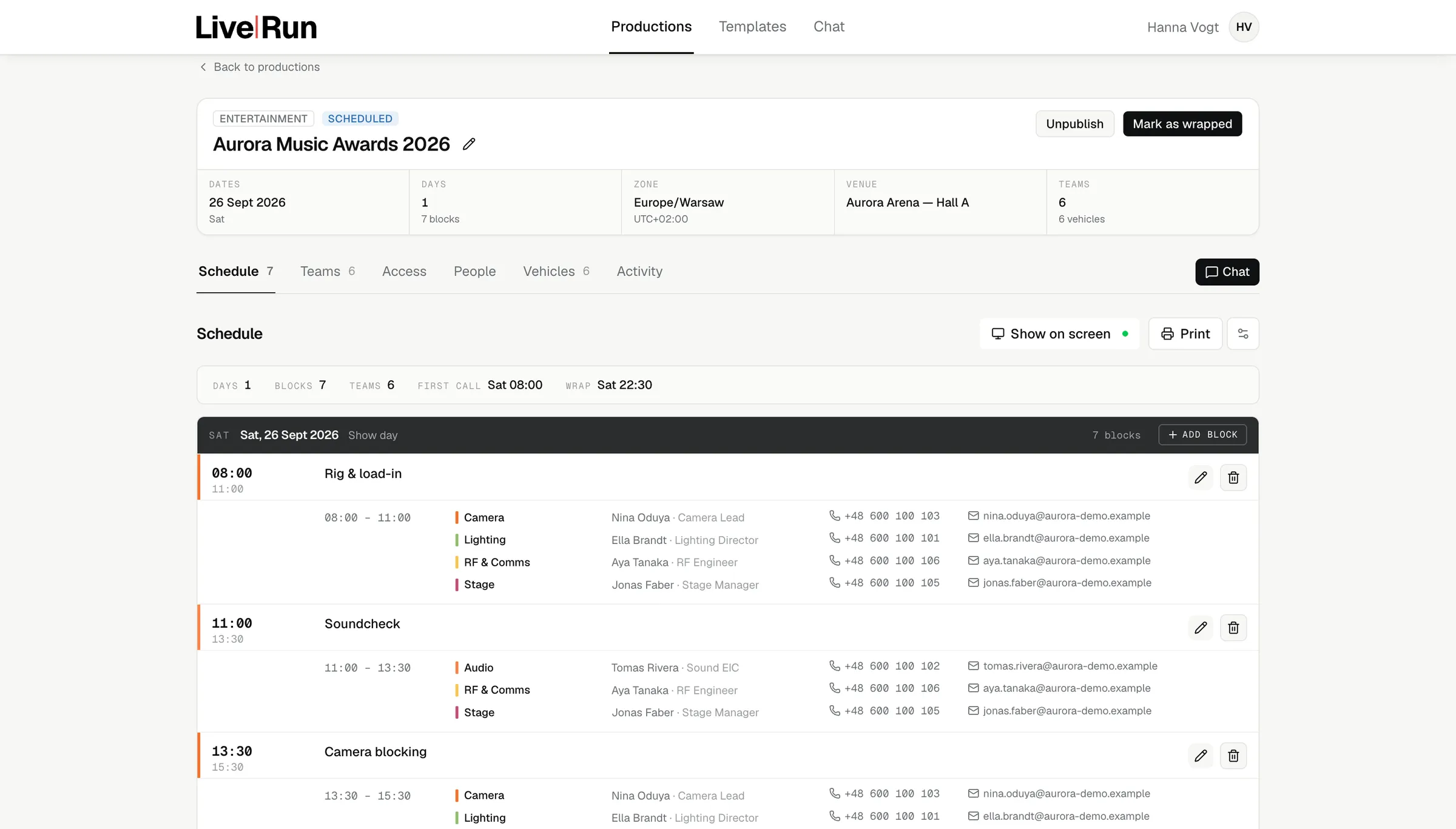
Move one block and everything after it moves with it. Pin a block and it holds — which is how a transmission window stays at 19:00 while the rehearsal runs long. Move the whole production to another date and the shape of the day holds.
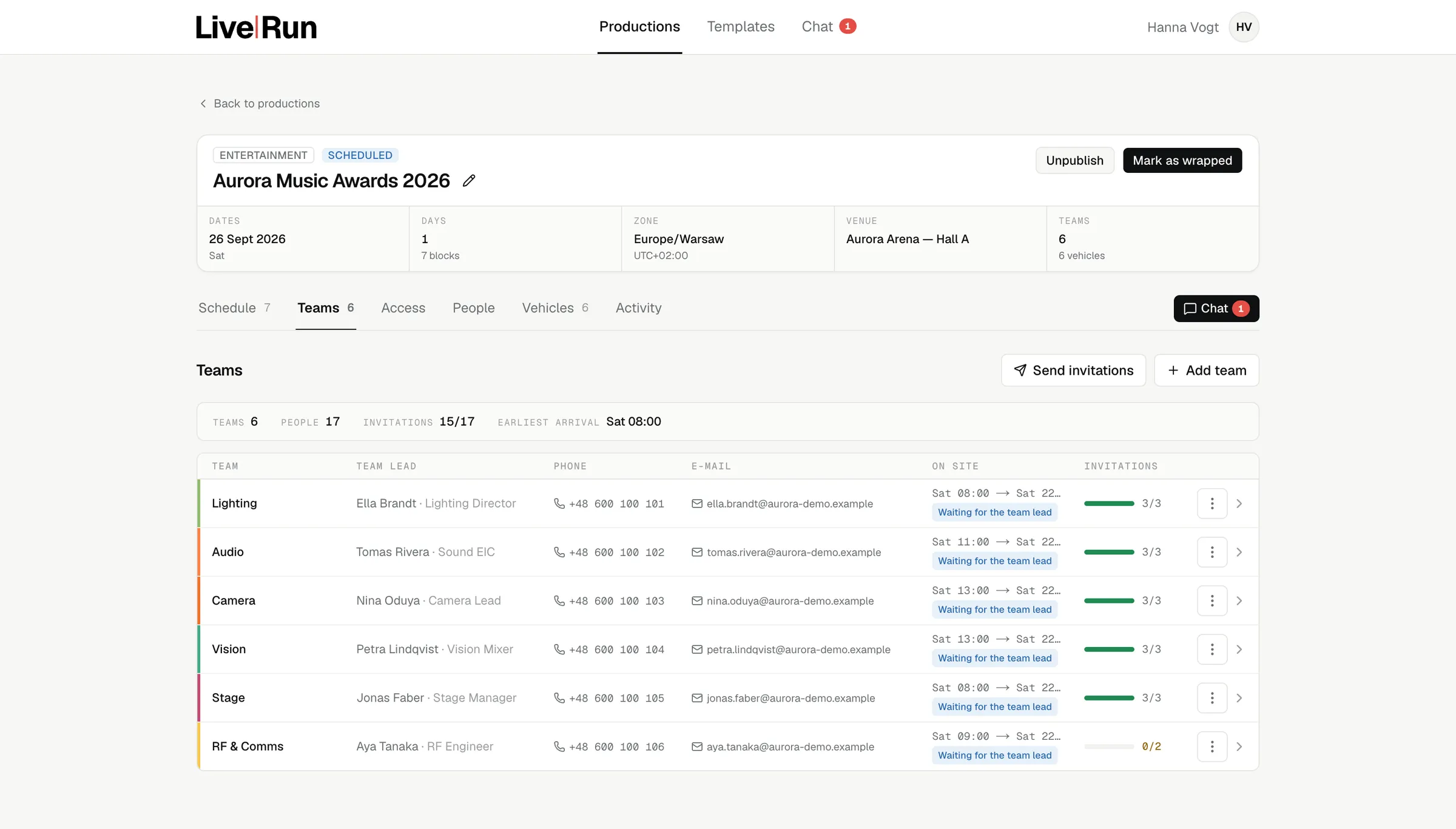
You invite the leads.
They bring their crews.
Name one lead per department and they staff their own department, and only their own. Each person carries their own call and release times, which may differ from the department’s. The panel shows the exceptions — who has not confirmed, who has no invitation — rather than a wall of confirmations.
The crew you have built up over years is yours.
Your contact book is held on your account, not on whoever hired you last. It comes with you into every production you are called into, and no client administrator can read it. A company can also keep a pool of its own — per department in a large operation — and a producer draws from the pool their department has.
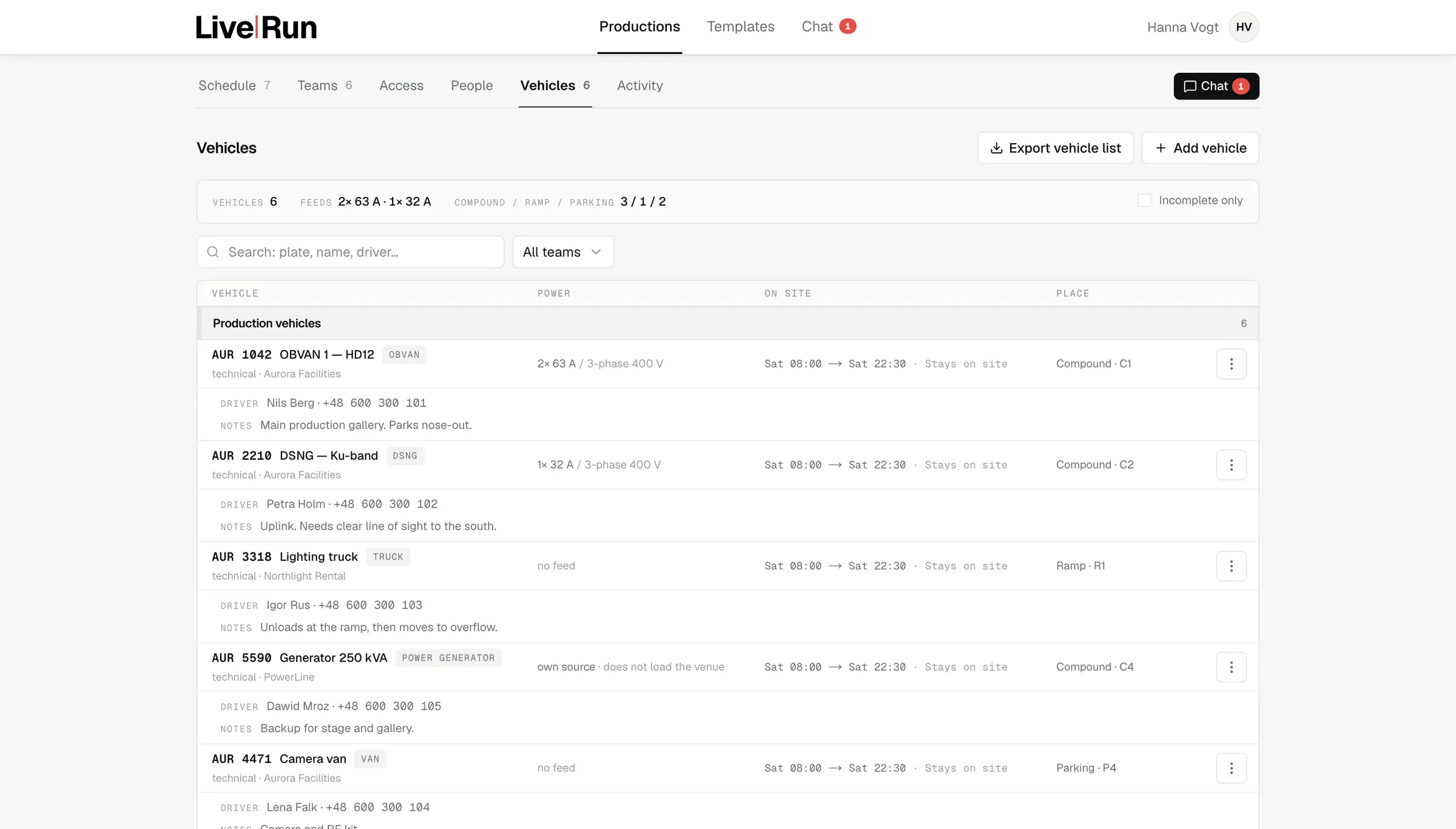
Where every vehicle parks,
and what it plugs into.
OBVAN, DSNG, generator, trucks and crew transport — each with its zone, its spot, its power feeds, its arrival and departure window, and the department that owns it. Enter a tall vehicle and the form asks for the height, because the measurement that matters is the one taken at the entrance.
It prints, and it exports.
People, vehicles and catering export as one workbook, in that order, because the venue reads the passes first, the gate second and the caterer last. The rundown, the schedule and the crew lists print at any time. In a gallery, paper always works.